


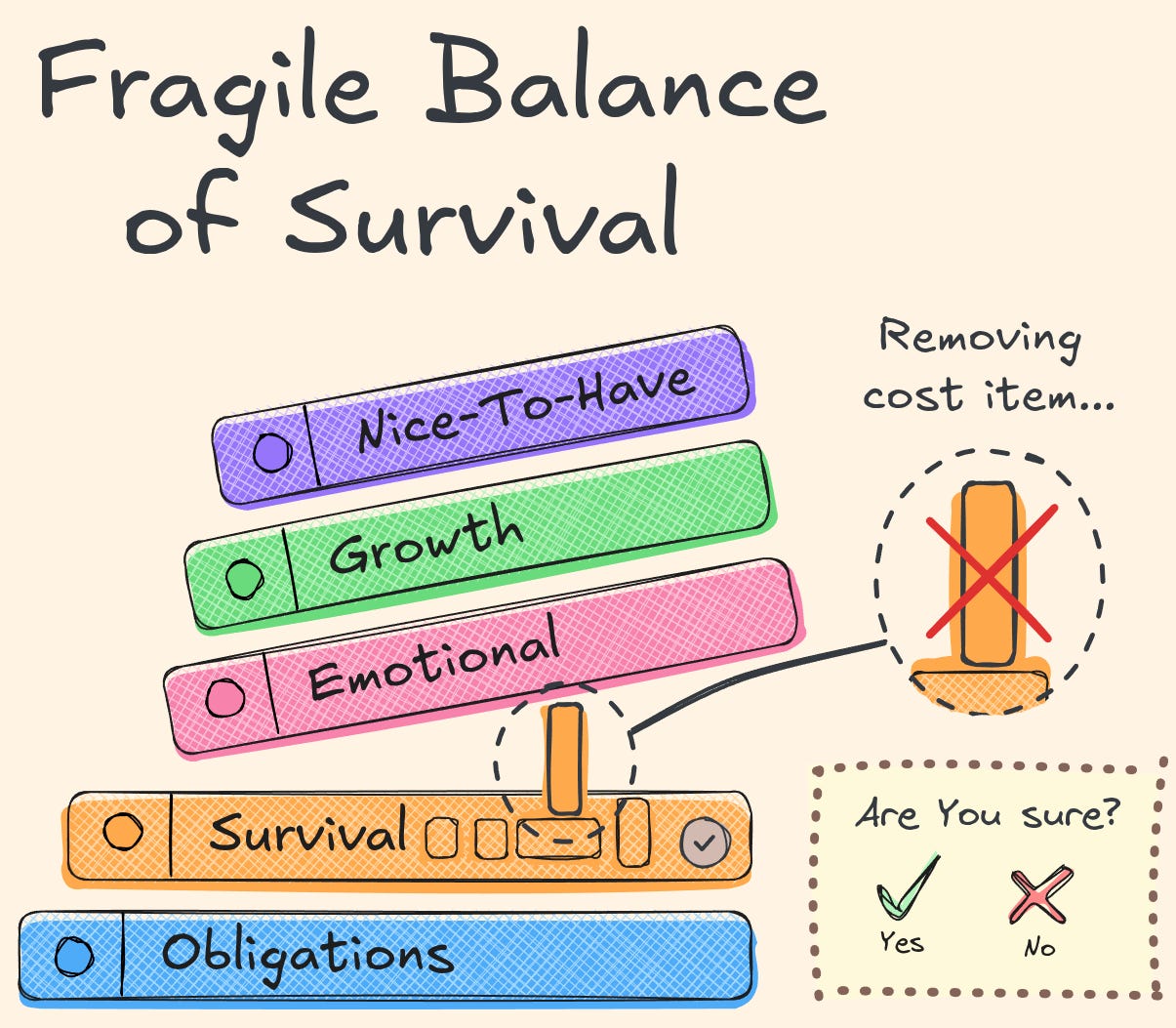
Obligation keep life functional. Survival keeps life alive.

This layer almost never gets tracked separately — it disappears inside a single "living expenses" line alongside Netflix, restaurant meals, and impulse buys.
When everything shares the same bucket, there is no way to tell what keeps a body alive from what simply keeps it comfortable.
Separating Survival is one of the most clarifying things you can do with a budget — not just for passive income, but on a salary too. Once you know the real number, everything above it becomes a choice, not a necessity.
The assumption is always that more is needed. The number usually proves otherwise.
What Survival Actually Contains
Survival covers what the body needs to remain operational: food, warmth, hygiene, water, shelter-related costs. Not the upgrade version. Not the comfortable version. The functional version only.
One question decides every expense here: does the body still function without it? If no — it belongs here. If Survival already covers that function, and this is simply a more comfortable version — it belongs in a higher layer (Emotional, Growth, Nice-To-Have).
Mine: €200 per month
Every line functional. None of it comfortable by design.
Firewood and propane because heating is not optional in winter. Clothing at €7/month is amortized — basic pieces, replaced only when worn out. Transport is for grocery runs, nothing else.
The Number Is Personal
€200 is not a universal truth. It is a specific result of specific choices — one meal a day, basic products, no convenience spending. The number changes mainly with location, body, age, weather, and habit.
Shelter alone shows how wide the range can be:
Living with parents — shelter cost is zero.
Renting in central Riga while working remotely — paying a premium for an address the body does not need.
Keeping a large apartment late in life with empty rooms and no gatherings — square meters that habit maintains, not function.
Same layer, completely different numbers.
What doesn’t change is the principle: Survival is the layer where honest choices live. Not aspirational ones, not social ones. The ones that answer only to the body.
Most budgets never make this separation, so the result is:
Food and dining out share one line
Groceries and snacks are indistinguishable
Convenience and necessity look identical
Comfort and survival are priced the same
The result is a single number that feels hard-coded — but look closer: half of it is habit, comfort, and assumption, quietly inflated. Splitting them reveals what is genuinely required. And that number is almost always smaller than expected.
The Second Threshold — Two Layers, One Baseline
Obligations: €80/month in my case — the cost of staying connected and operational.
Survival: €200/month in my case — the cost of keeping the body functional.
Combined: €280/month in my case. This is the absolute floor — the number below which life on Earth cannot physically continue.
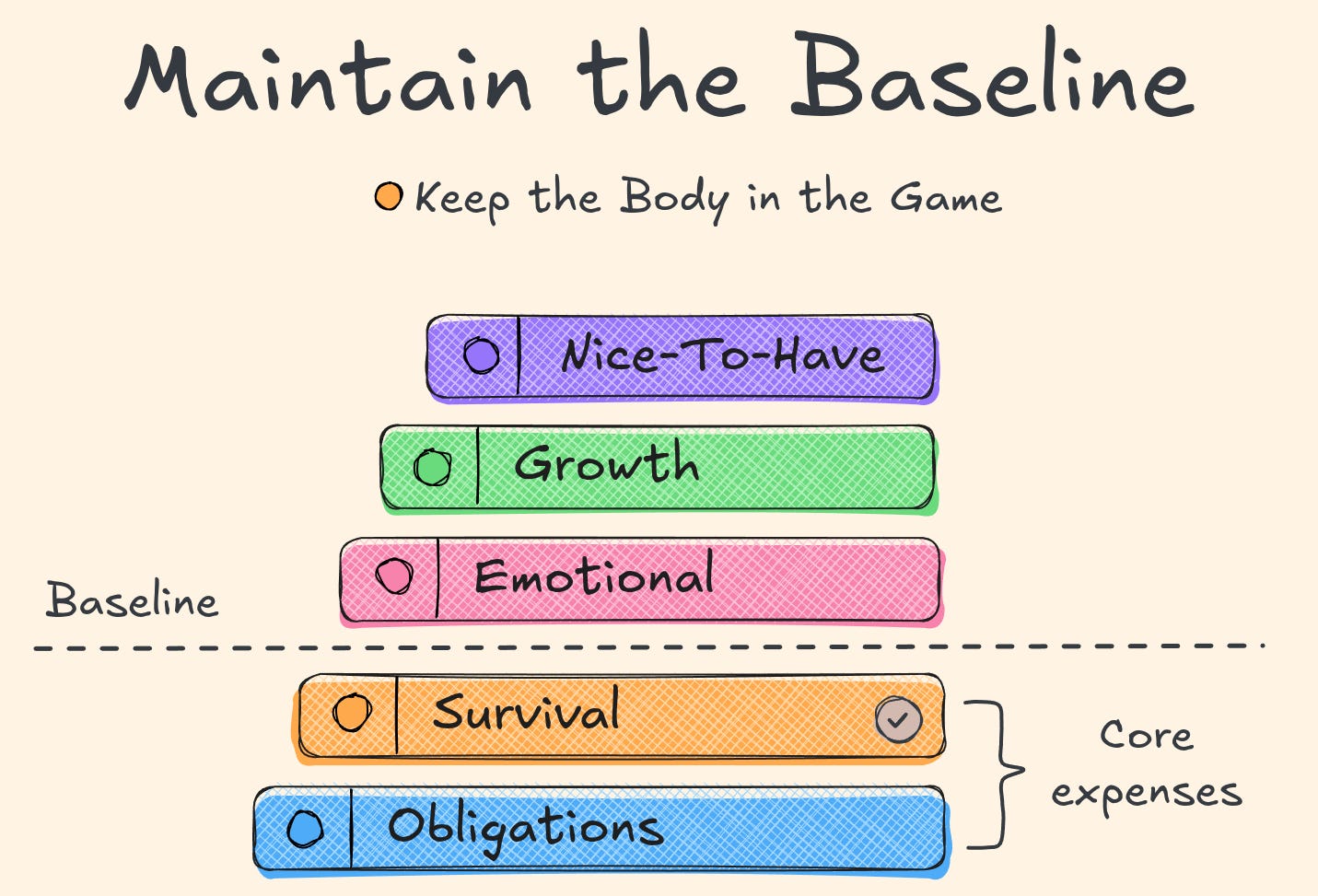
When passive income covers both layers, the core expenses are permanently settled.
What remains above — Emotional, Growth, Nice-To-Have — carries a different quality. Those layers can flex — they respond to mood, season, circumstance, flow. These two do not move. Obligations even less.
That is why the floor matters more than anything built above it.
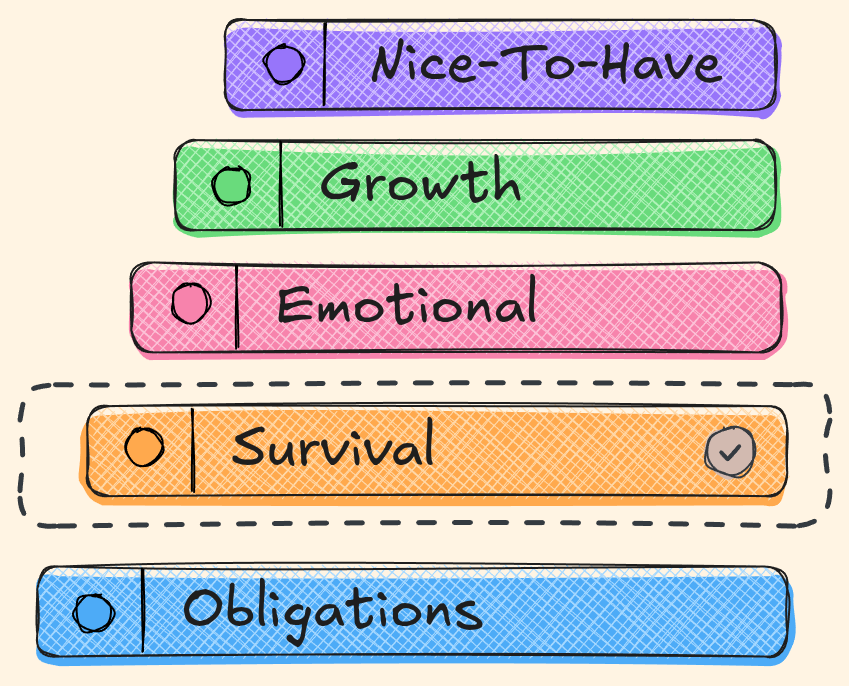
Illustrations by Valters Šverns
Next: Emotional — the third layer. For me it's a city, traffic noise, or a mountain trail after two weeks at home in remote work mode. For my neighbour — food on the table and people around it. Same layer, completely different price tag. Skip Emotional layer long enough — and something in the day quietly stops working. See you there.